Tushar Lab
Research
We develop data-centric AI frameworks for healthcare and medicine — building tools, data, and evaluation methods that are clinically grounded, rigorously tested, and worthy of real-world trust.
What We Work On
Research Areas
Our research spans four interconnected themes — from curating better data and building intelligent clinical tools, to leveraging simulation and synthetic data to advance healthcare AI.
Data-Centric AI
Advancing AI by improving the data it learns from — through better curation, quality assessment, diversity analysis, and rigorous benchmarking for clinical reliability.
Intelligent Clinical Tools
Designing AI-powered tools that integrate meaningfully into clinical workflows — reducing burden, supporting decision-making, and adapting to real-world healthcare settings.
Simulation & Virtual Trials
Leveraging physics-based simulation and virtual patient models to evaluate AI rigorously, safely, and at scale — where real-world clinical testing alone is limited or costly.
Synthetic & Generative Data
Creating controllable, privacy-preserving synthetic datasets and generative models for AI training, evaluation, and reproducible experimentation in medicine.
Flagship Work
Featured Projects
Selected projects that represent our lab's core contributions — advancing how medical AI is built, evaluated, and trusted in clinical practice.

HAID
Health AI Data Resource
An open-access repository providing 13+ standardized medical imaging datasets covering lung cancer, COVID-19, and universal lesions with expert-verified annotations, preprocessed files, and train-test splits to democratize access to high-quality clinical data for AI/ML development.
Democratizes access to high-quality, standardized clinical data — accelerating reproducible AI research across multiple disease domains.
TriAnnot
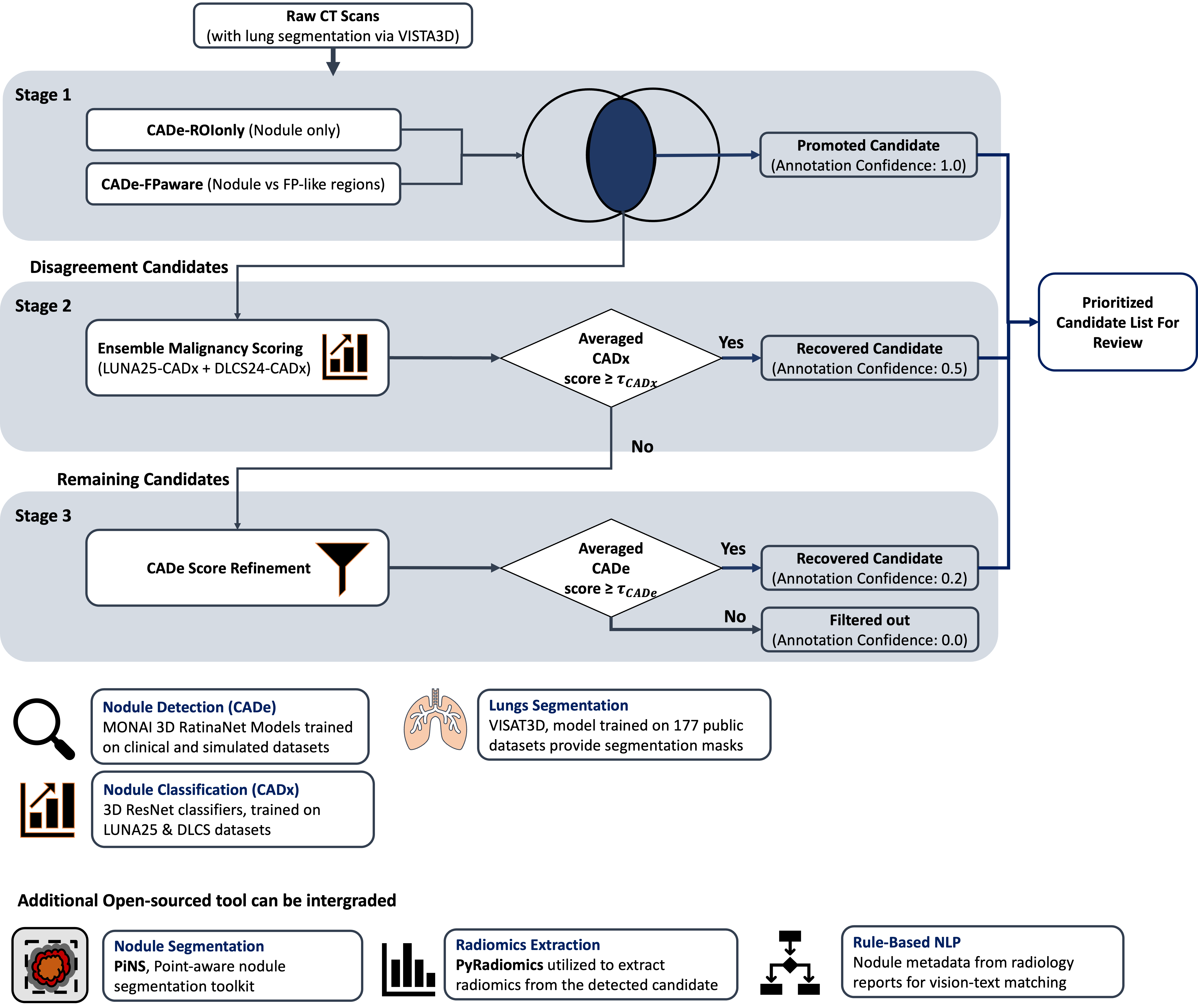
Multi-Stage AI Pipeline for Lung Nodule Annotation
A comprehensive, freely available pipeline integrating lung segmentation, nodule detection, and malignancy classification into a unified tri-stage workflow designed to prioritize sensitivity while reducing annotator burden for first-pass lung nodule annotation in screening CT.
Reduces manual annotation burden and improves consistency in lung nodule identification — enabling faster, more reliable screening workflows.
All Projects
Research Portfolio
A broader view of ongoing and published work across the lab — from tools and datasets to evaluation frameworks and generative methods.
VLST
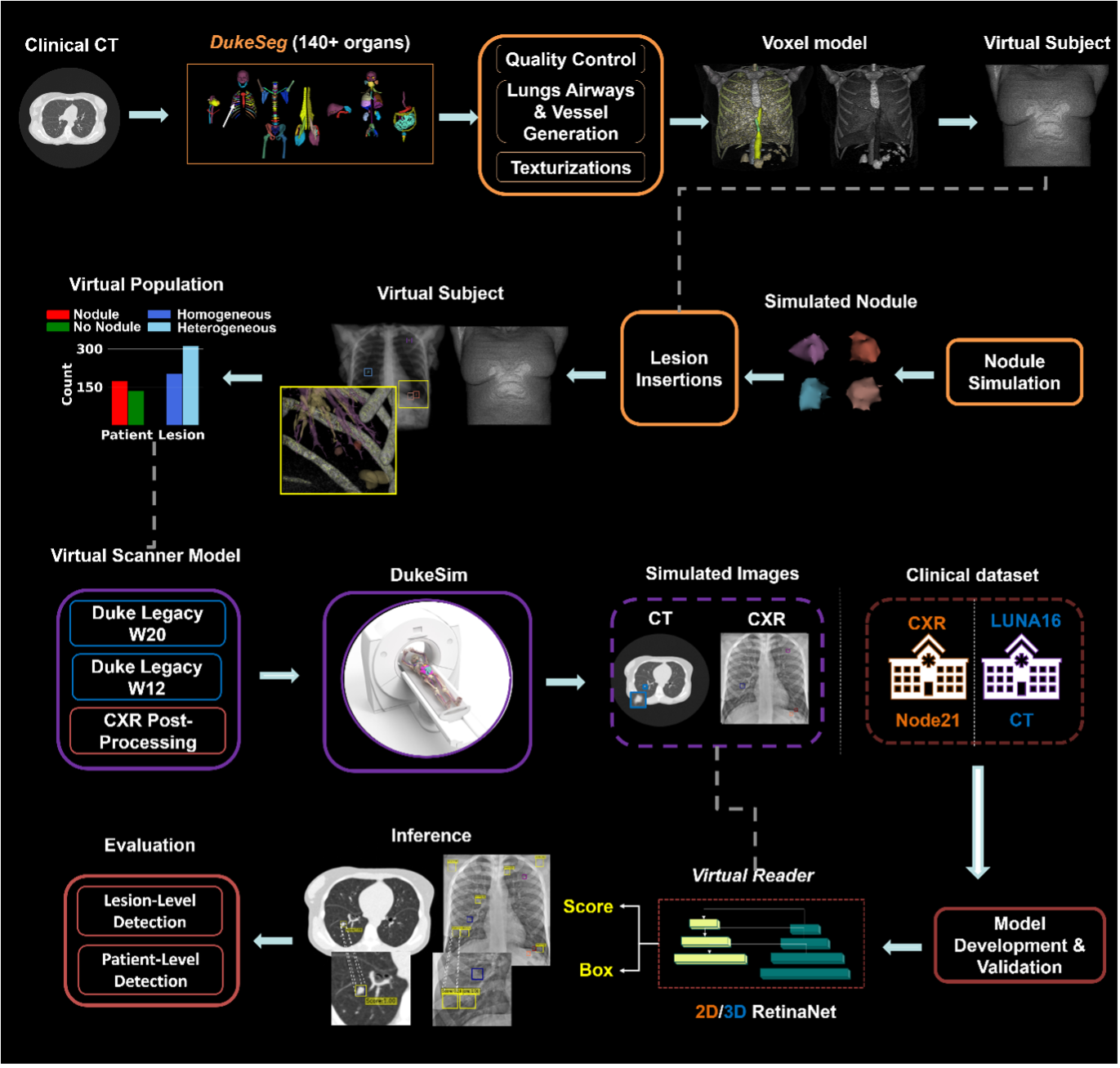
Virtual Lung Screening Trial
A large-scale virtual imaging trial simulating low-dose CT lung cancer screening across diverse patient populations, scanner models, and acquisition protocols.
View Project →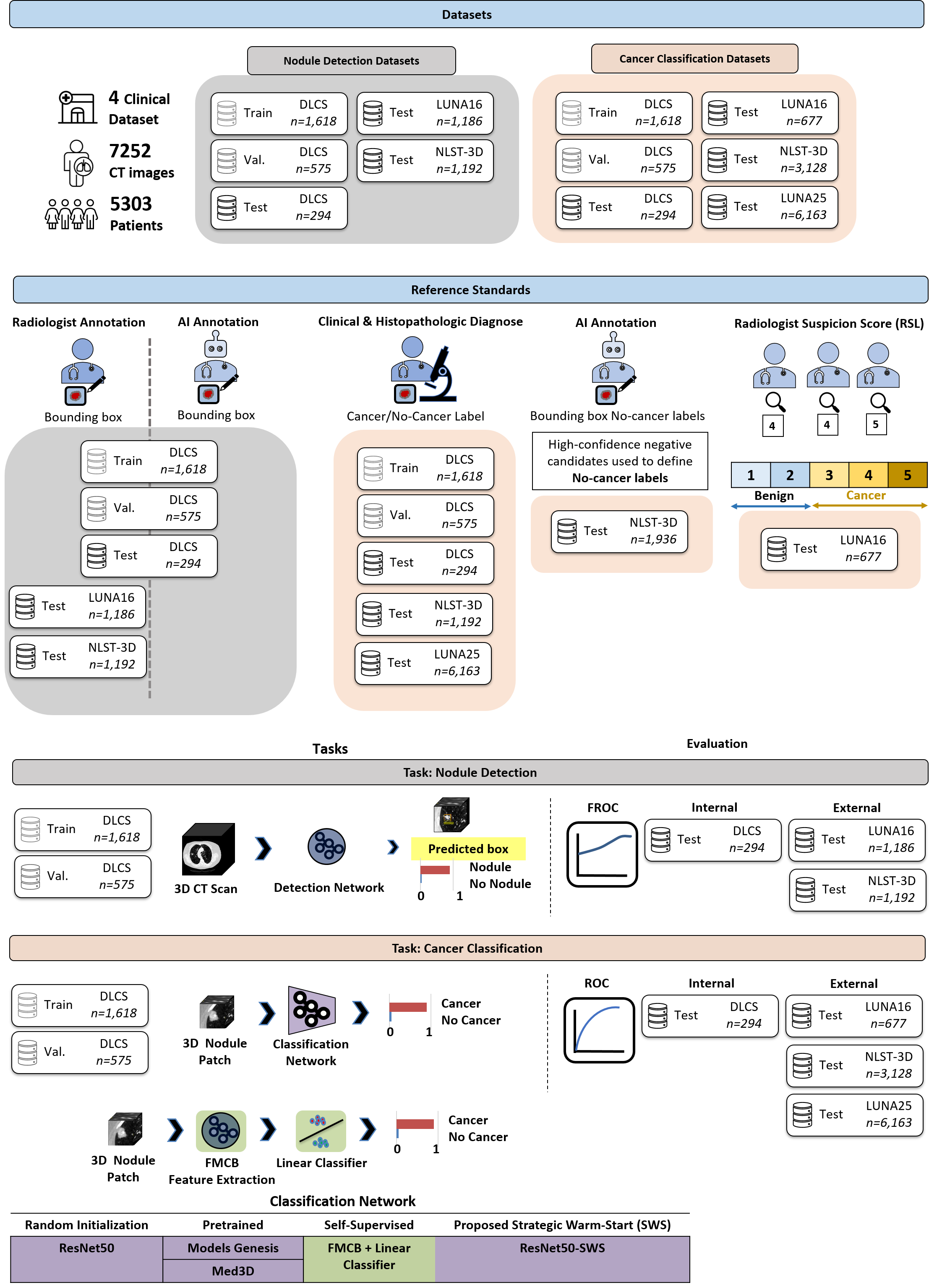
AI in Lung Health
Benchmarking Detection and Diagnostic Models Across Multiple CT Scan Datasets
A public, reproducible multi-dataset benchmark for lung nodule detection and cancer classification, demonstrating that detection performance is strongly driven by dataset characteristics.
View Project →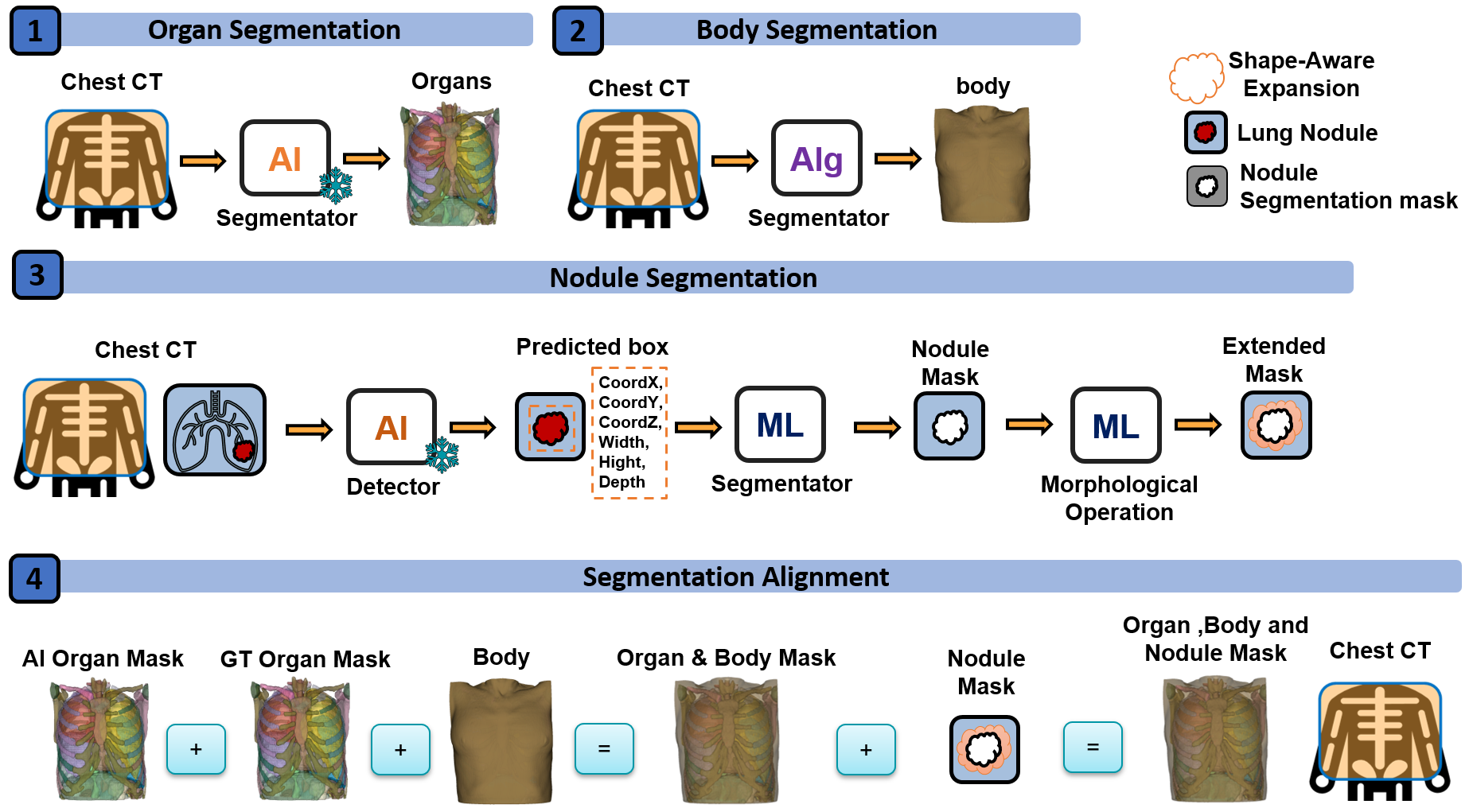
NoMAISI
Nodule-Oriented Medical AI for Synthetic Imaging
A generative framework using flow-based diffusion and ControlNet conditioning to create realistic synthetic CT images with AI-generated lung nodules for data augmentation.
View Project → HAID
Health AI Data Resource
An open-access repository providing 13+ standardized medical imaging datasets with expert-verified annotations and preprocessed files for AI/ML development.
View Project → TriAnnot
Multi-Stage AI Pipeline for Lung Nodule Annotation
A freely available pipeline integrating lung segmentation, nodule detection, and malignancy classification into a unified tri-stage workflow for screening CT.
View Project →Collaboration
Interested in collaborating?
We welcome collaborations with clinical, industry, and academic partners. Reach out to discuss potential projects.